
Technology Becomes Infrastructure: Düsseldorf Shows How Local Hydrogen Production Is Integrated Into an Actual Supply System.
The ceremonial commissioning of Stadtwerke Düsseldorf’s 2 MW PEM electrolyzer on Höherweg demonstrated what a concrete hydrogen economy in an urban setting can look like: locally produced, integrated into existing infrastructure, and directly incorporated into a real-world application. For us, this commissioning marks the transition from engineering, manufacturing, and integration to the operational use of a system that produces hydrogen right where it’s needed. In this project, Stadtwerke Düsseldorf, Rheinbahn, and H2 MOBILITY are combining production, refueling infrastructure, and mobility applications into a closed, integrated system. And FEST has supplied the electrolyzer, the central technical component for this system.
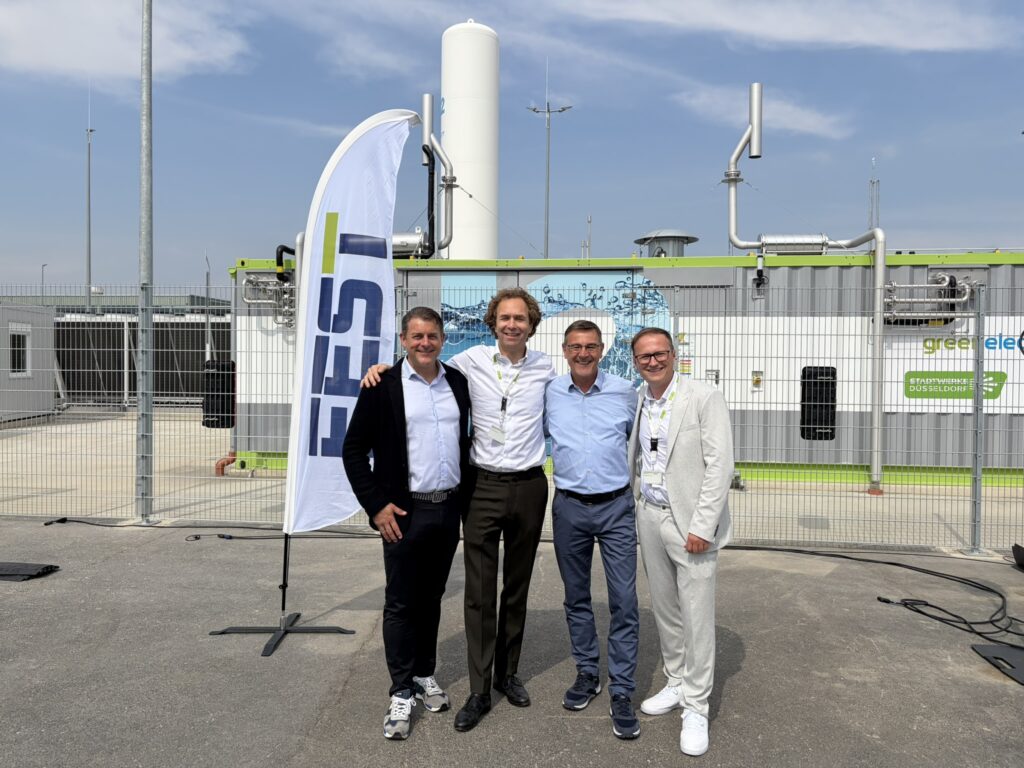
Steffen Bäuerle (CEO of FEST), Mortimer Glinz (CEO of the Schmidt Kranz Group), Matthias Authenrieth (CEO of FEST), and Martin Greda (CTO of FEST) at the official commissioning ceremony in Düsseldorf
Technology Designed for Performance
PEM electrolysers can be operated dynamically and respond quickly to changing demands. For Düsseldorf, this flexibility is particularly crucial on the demand side, because since the facility is located at a publicly accessible hydrogen refueling station, it is difficult to predict demand over time. The electrolyzer must therefore be able to reliably handle varying demand profiles, and PEM technology is ideally suited for precisely this purpose.
Container Solution as an Industrial System Module
Containerized electrolysis systems reduce interfaces, simplify transportation and installation, facilitate maintenance, and establish defined system boundaries. In urban environments, this is no minor consideration. Space is limited, permitting processes are complex, and existing utility infrastructure must be taken into account. A modular, pre-integrated solution therefore significantly increases the feasibility of such projects.
Electrolyzers must operate reliably, respond flexibly, be safe to operate, and integrate seamlessly into existing infrastructure. System expertise is therefore particularly important in municipal applications: The system must be able to handle the actual conditions at the site while also meeting the requirements of downstream infrastructure.
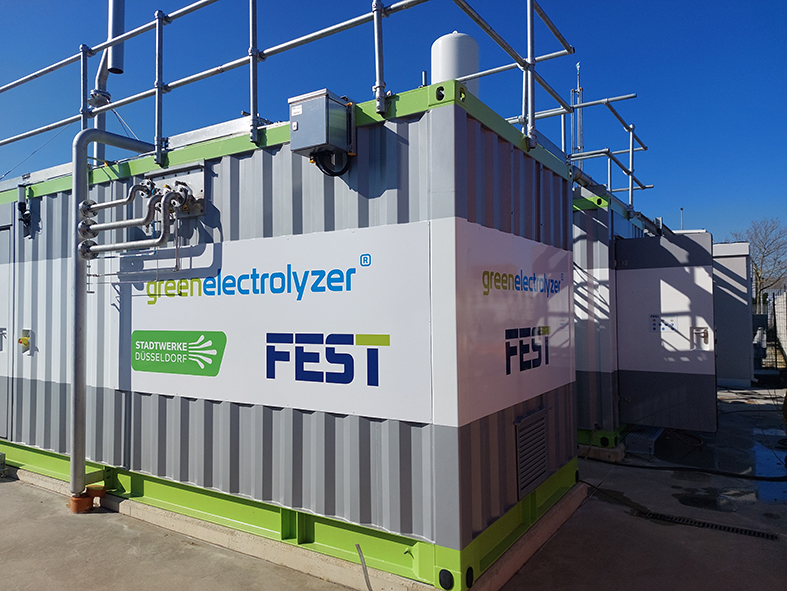
Local Hydrogen Production as an Infrastructure Issue
The Düsseldorf approach demonstrates why local hydrogen production is so important for the market ramp-up. A hydrogen economy does not emerge solely from large-scale production capacities located somewhere within the energy system. It emerges where production, storage, transportation, refueling, and use align both technically and economically.
In Düsseldorf, existing local energy derived from the biogenic components of waste incineration is converted into a chemical energy carrier that can be used directly in the mobility sector. This makes sector coupling a tangible reality: from local energy generation through hydrogen production to its use at the gas station. When hydrogen is produced directly on-site, additional transport routes are eliminated. At the same time, supply security for local use is enhanced. Stadtwerke Düsseldorf emphasizes precisely this point: Local production creates regional economic value and avoids CO₂ emissions associated with hydrogen transport.
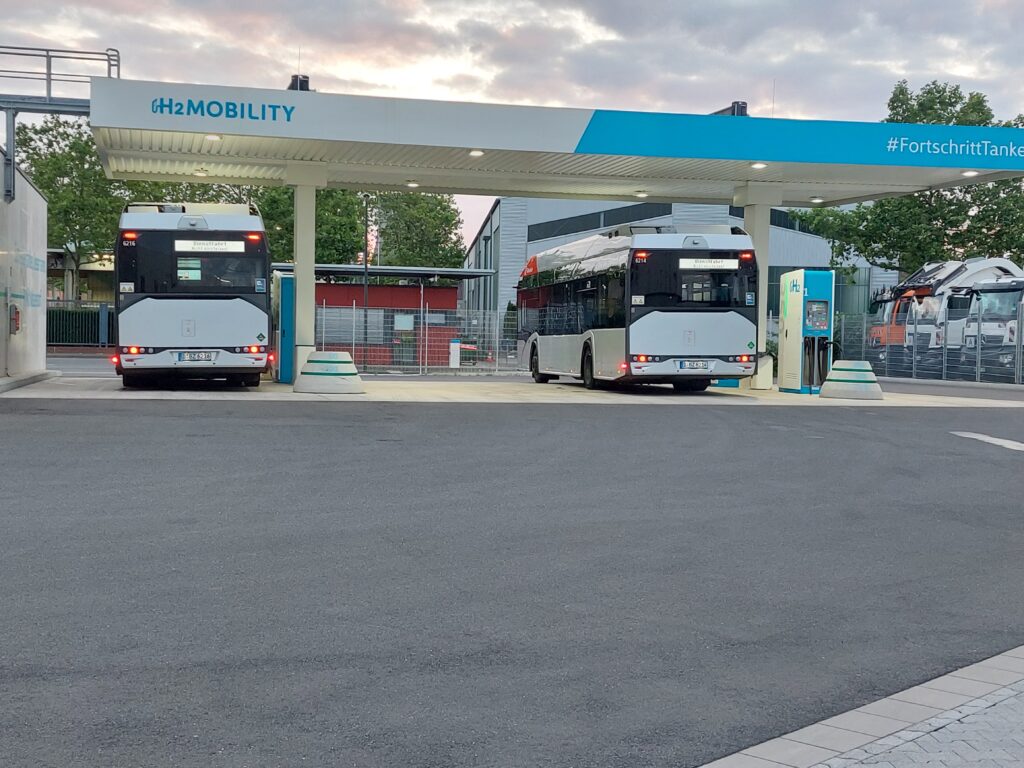
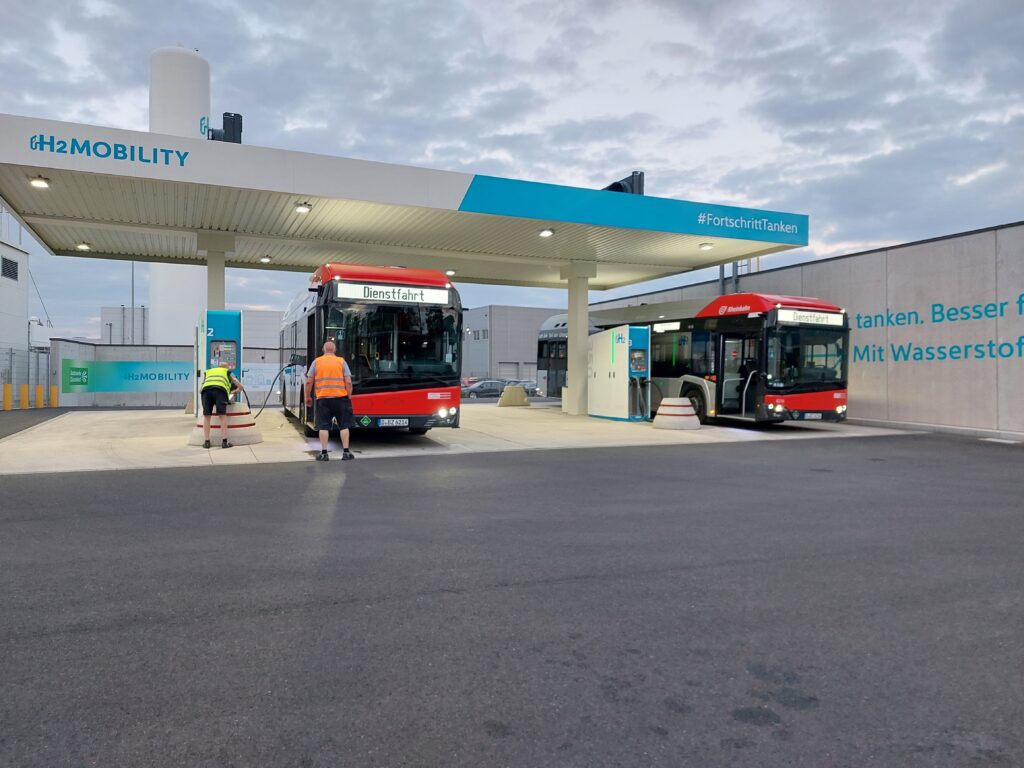
This logic is particularly strong in urban areas. Cities need low-emission solutions for public transportation, municipal fleets, logistics, and heavy-duty vehicles. At the same time, they have energy and utility infrastructures that can be further developed from a technical standpoint. In Düsseldorf, hydrogen production is linked to an existing hydrogen refueling station on Höherweg, which is designed for buses, trucks, and passenger cars. With the commissioning of the electrolyzer, the existing supply solution will be supplemented by local production. This closes part of the value chain directly within the city.
Why This Project Extends Beyond Düsseldorf
Relevant System Decisions
Such projects are crucial for the ramp-up of the hydrogen economy because they bridge the gap between strategy and operations. In policy documents, hydrogen is often described as a building block of the energy transition. In Düsseldorf, it becomes clear what systemic decisions are actually necessary for this: a reliable generation technology, a suitable location, available energy, infrastructure partners, concrete customers, and an operational concept. Only when these elements come together does market readiness emerge—not as a mere claim, but as a proven reality in operation.
Transferability Based on System Principles
Scalability is inherent in the system’s design. Municipalities, public utilities, industrial parks, ports, and mobility hubs can develop similar models by combining local energy sources, suitable applications, and scalable electrolysis technology. Hydrogen systems must be able to scale up in a modular fashion. The initial implementation often begins with clearly defined applications such as public transit or commercial vehicle fleets. This can lead to the creation of regional hubs that integrate additional consumers. FEST’s greenelectrolyzer systems are designed to be modular; multiple units can be linked, and projects can be scaled in the future.
From Concept to Industrial Reality
The launch in Düsseldorf demonstrates that hydrogen becomes relevant when technology is integrated into real-world supply systems. This is precisely why the Düsseldorf project is an important step for the hydrogen economy: it combines technological capability with municipal implementation capacity. It shows how local energy is converted into usable hydrogen. And it makes it clear that scaling up doesn’t begin with large-scale projects, but rather with systems that work today, are expandable, and supply concrete applications. It is precisely these kinds of projects that bring hydrogen from the conceptual phase into industrial reality.
Further information on the project
